

Drop Drop — Water saving & intelligent irrigation - Demonstration template
An environmental project to raise awareness among families, schools, farmers and communities of water saving, waste reduction and smart irrigation. The project combines practical workshops, simple kits, consumer monitoring and pilot actions on the ground.
Goutte
Save water, reduce waste and test simple smart irrigation solutions for families, schools and community spaces.
Vision & Objectives
Make water saving a simple, measurable and collective reflex.
Goutte is an environmental project designed to encourage families, schools, associations, small farmers and community spaces to reduce water waste on a daily basis.
The project combines awareness, practical actions, simple diagnostics, educational workshops and installation of drip irrigation pilot solutions. The aim is to show that every litre saved can have a real impact when good practice is applied collectively.
The approach is based on concrete actions: detection of leaks, improvement of consumption habits, installation of simple watering systems and monitoring of results in pilot sites.
Raising awareness of simple water saving actions.
Accompany schools and community spaces in practical actions.
Test drip irrigation kits at pilot sites.
Measure savings and publish an accessible balance sheet.
Methodology & Approach
The project follows a progressive approach to moving from awareness to measurable action on the ground.
Diagnostic: Observation of uses, identification of leaks, estimation of waste points and selection of pilot sites.
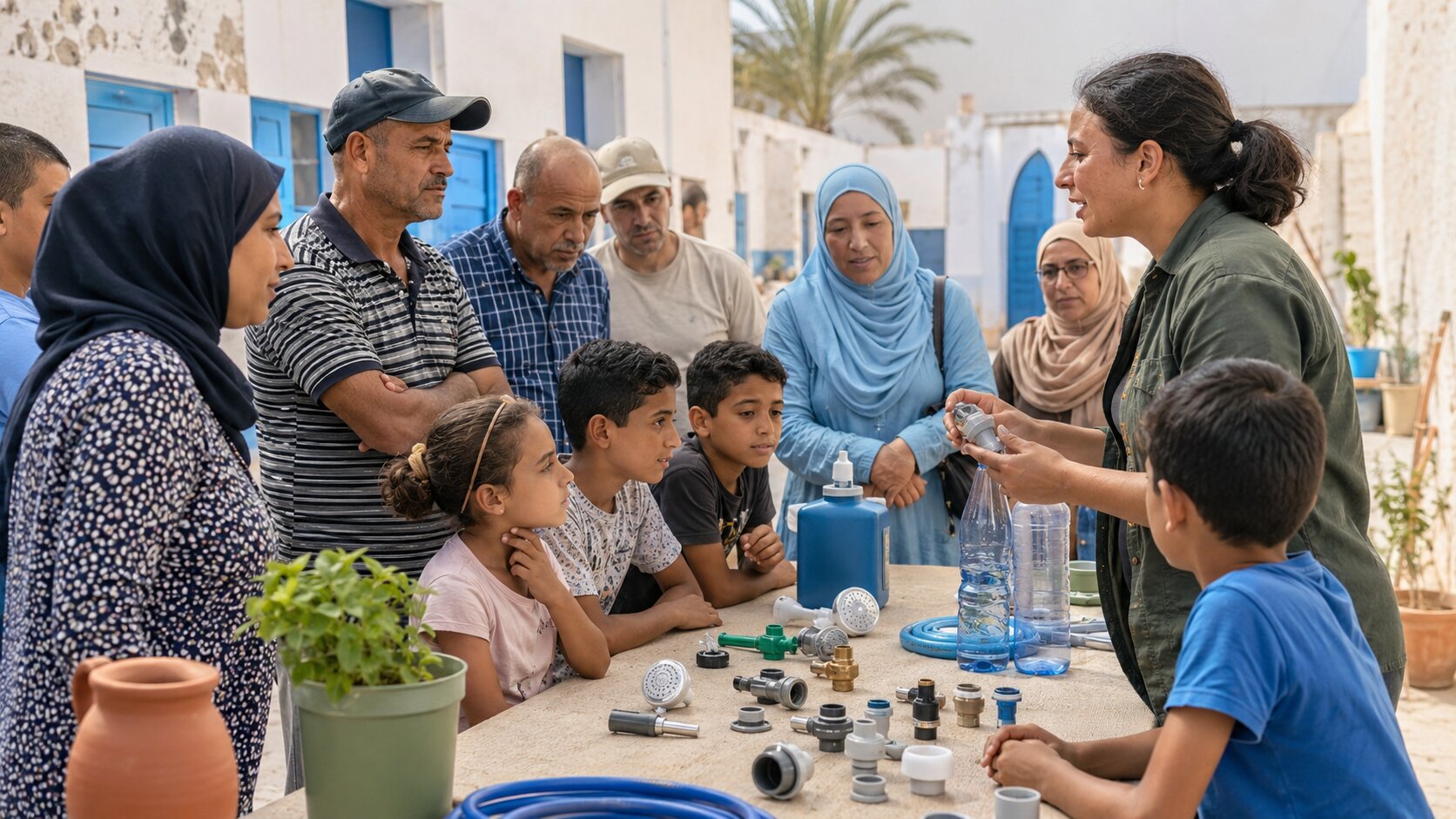
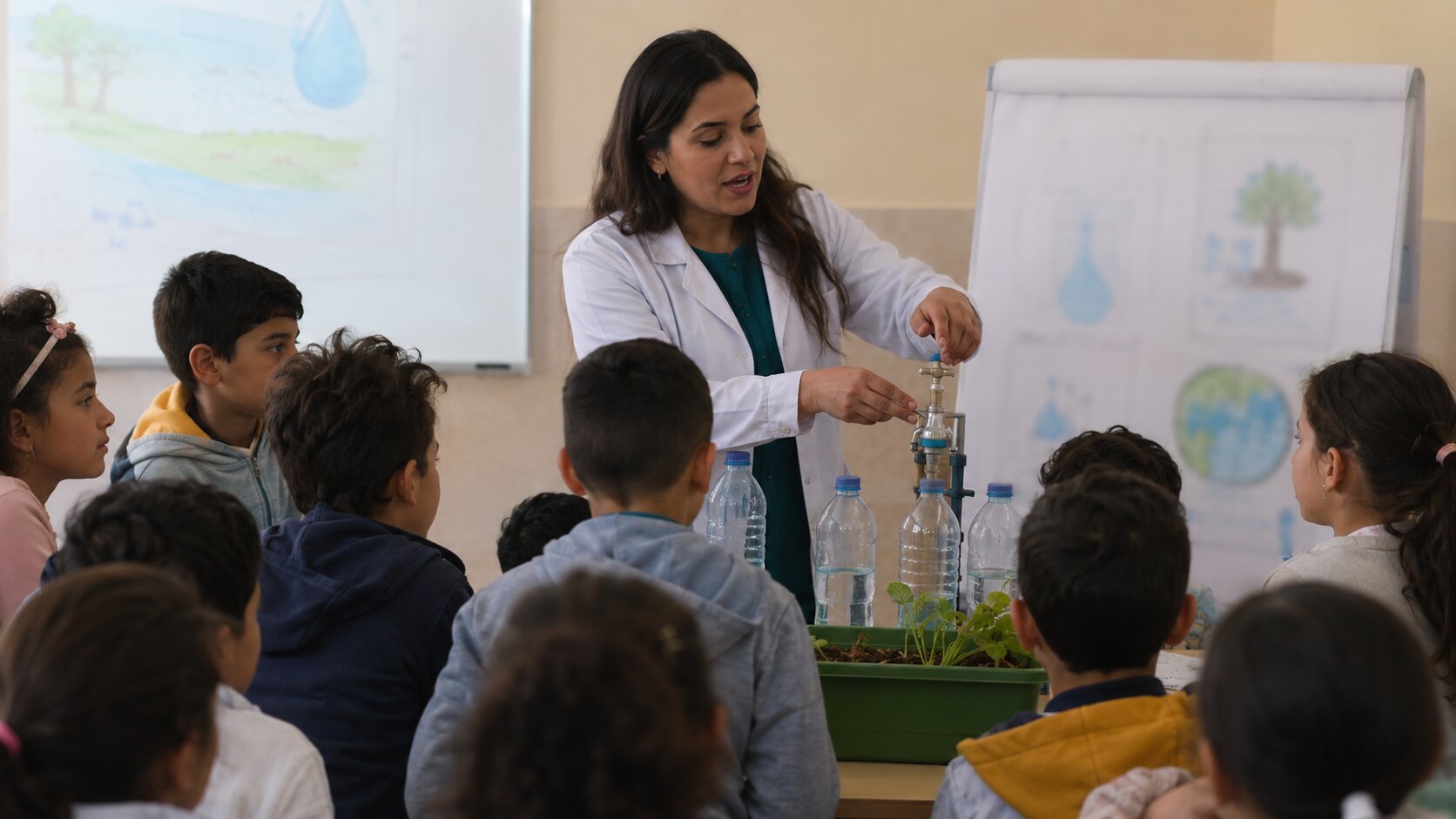
Awareness: workshops in schools, associations and community spaces around simple water saving gestures.
Installation: installation of simple kits: saver tips, drip watering, recovery of non-drinking water when possible.
Monitoring: comparison of pre/after habits, collection of returns and publication of an impact assessment.
Key figures
10
Pilot sites
1 000
Sensitized participants
150
Tested saver kits
30%
Targeted reduction on targeted uses
Project schedule
Août 2026
Project launch
Establishment of the team, selection of pilot areas and preparation of awareness-raising tools.
Septembre 2026
Field diagnostic
Identification of participating schools, gardens, associations and community spaces.
Octobre 2026
Awareness workshops
Practical sessions on water saving gestures, leaks and rational watering.
Novembre 2026
Installation of the first kits
Implementation of simple solutions: drop-by-drop, saver tips and monitoring of uses.
Janvier 2027
Intermediate monitoring
Collection of first returns and adjustment of practices on pilot sites.
Juin 2027
Review & Recommendations
Publication of a summary report and recommendations to expand the project.
Project Pillars
Three axes to move from awareness to measurable impact.
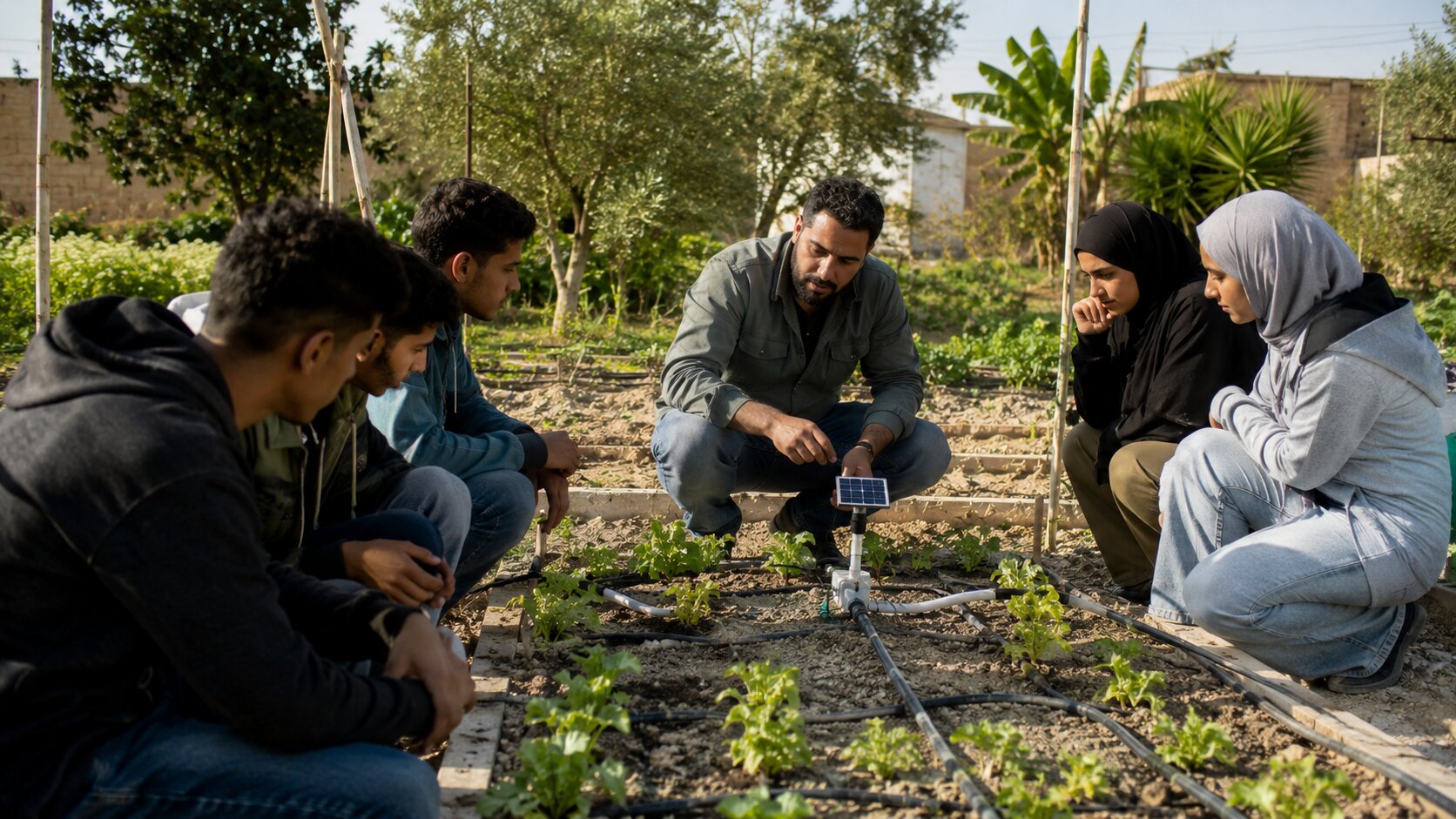
Awareness raising
Organize simple workshops to explain water saving actions at home, at school and in collective spaces.
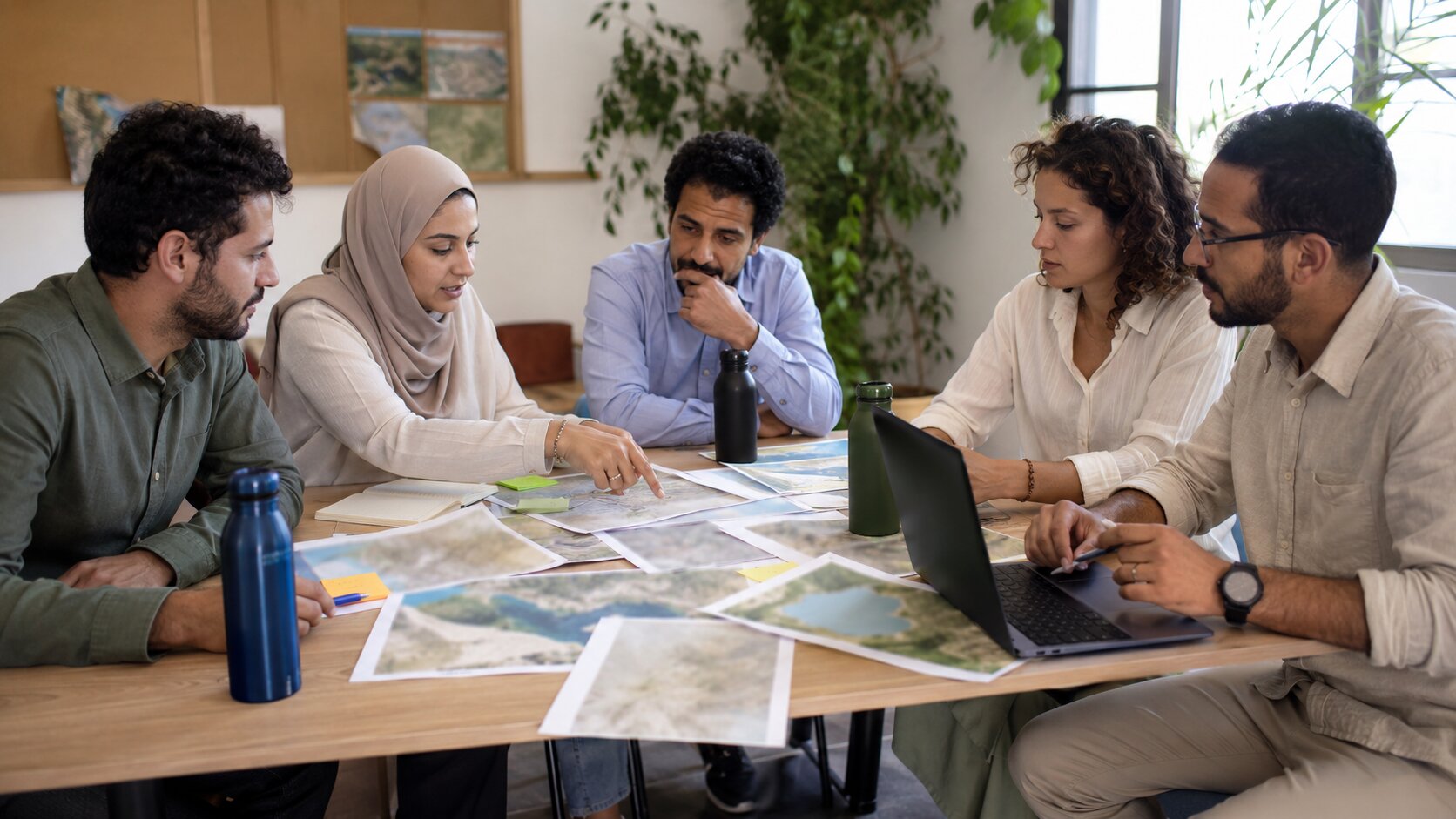
Diagnosis of loss
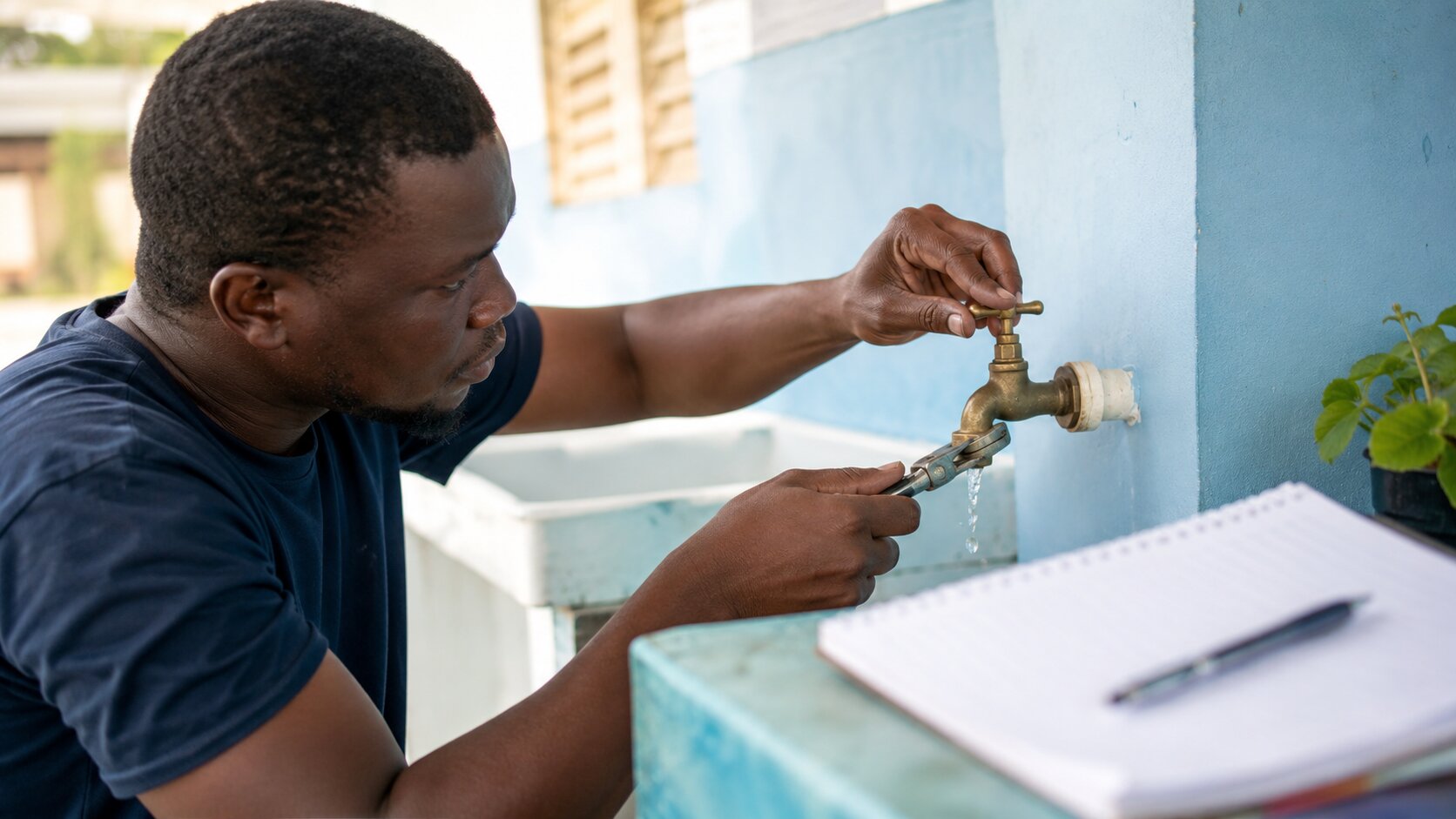
Identify leaks, misuses and waste points to prioritize useful corrections.
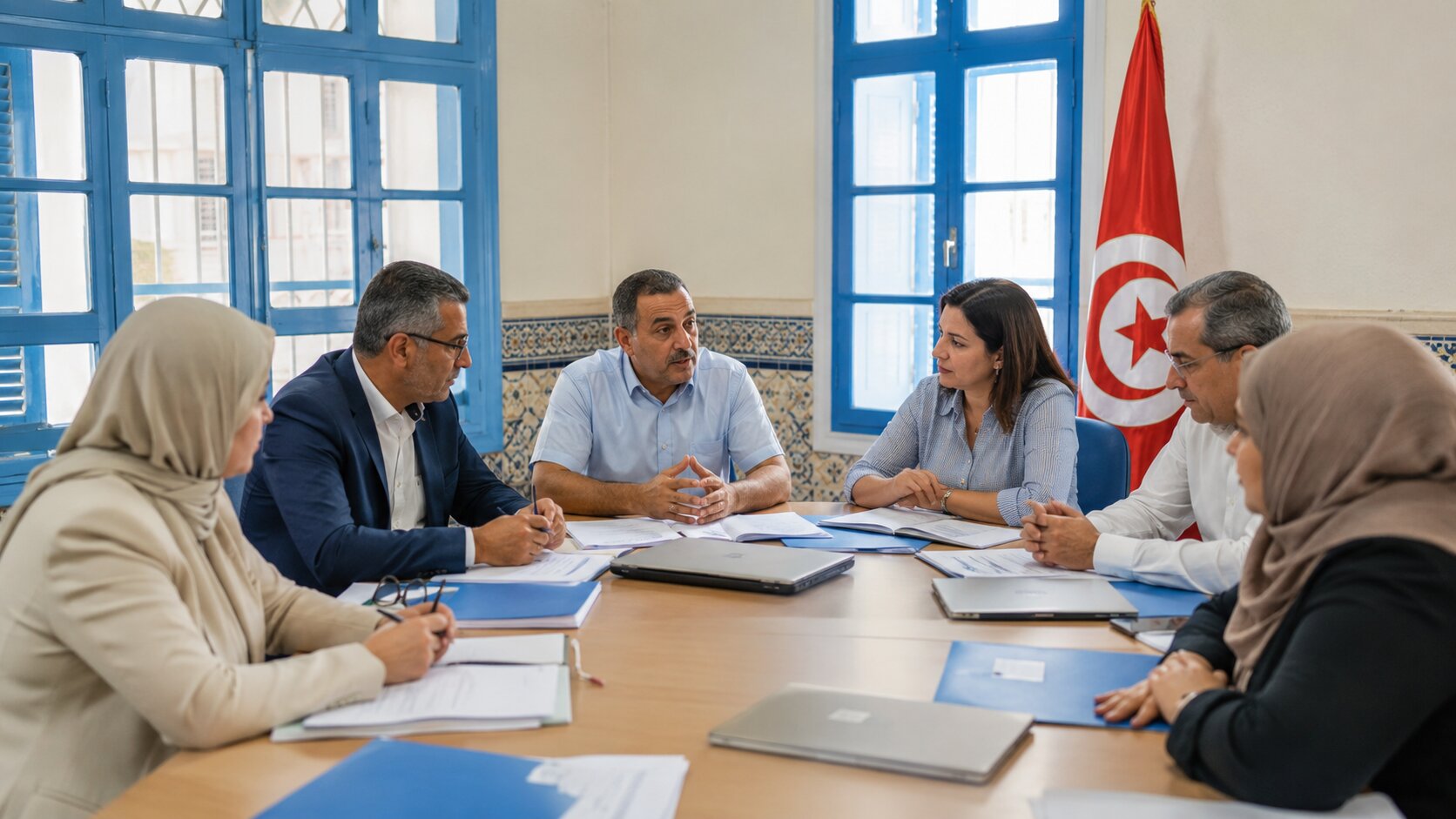
Intelligent Irrigation
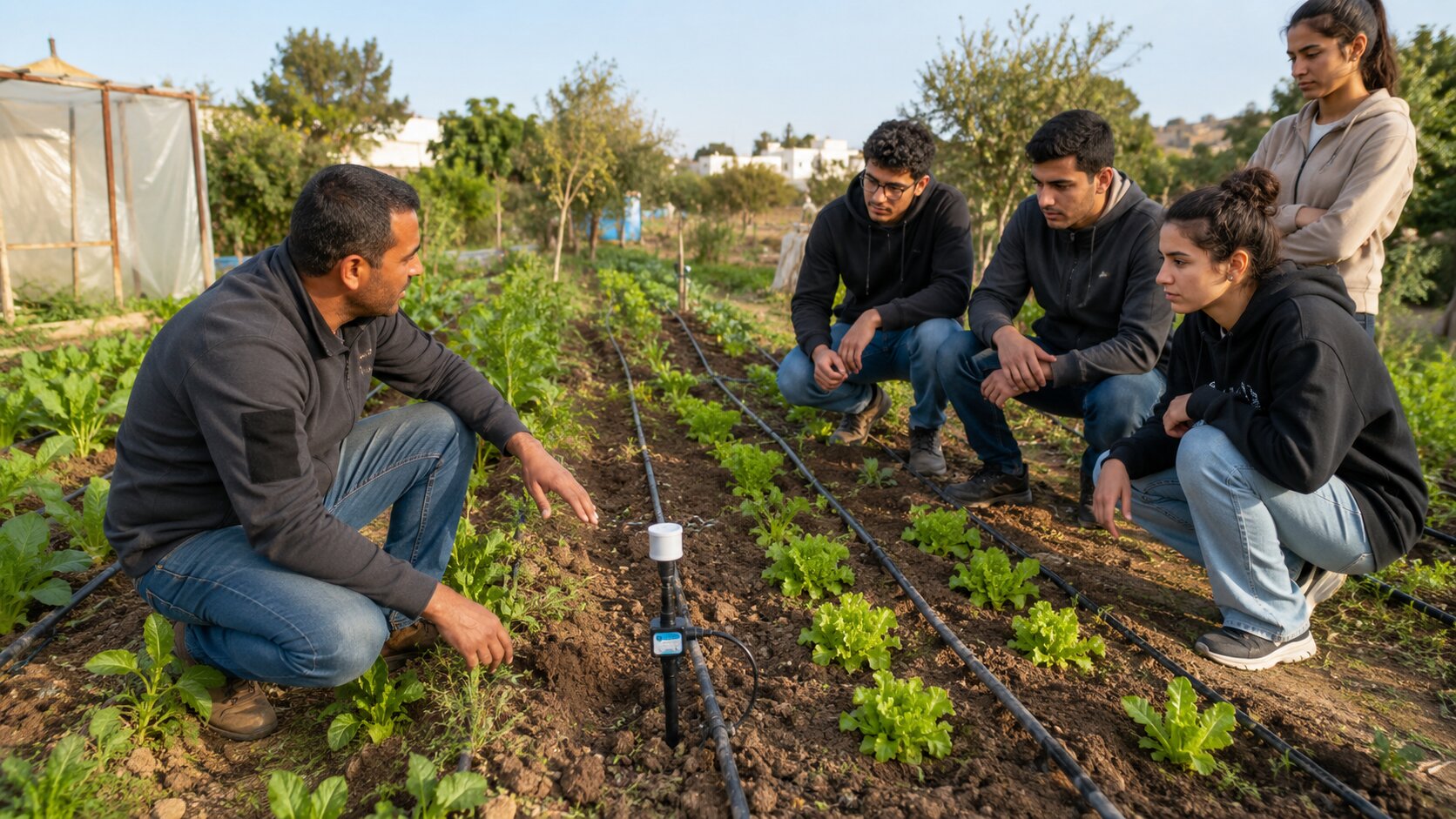
Test drip solutions and reasoned watering practices on pilot sites.
Project team
Yassin Marzouki
Project coordinator — planning, local partnerships and overall monitoring.
Rim Kallel
Reference irrigation — installation of drip kits and technical accompaniment.
Nadia Ferchichi
Awareness officer — school workshops, teaching materials and citizen mobilization.
Photos of the field
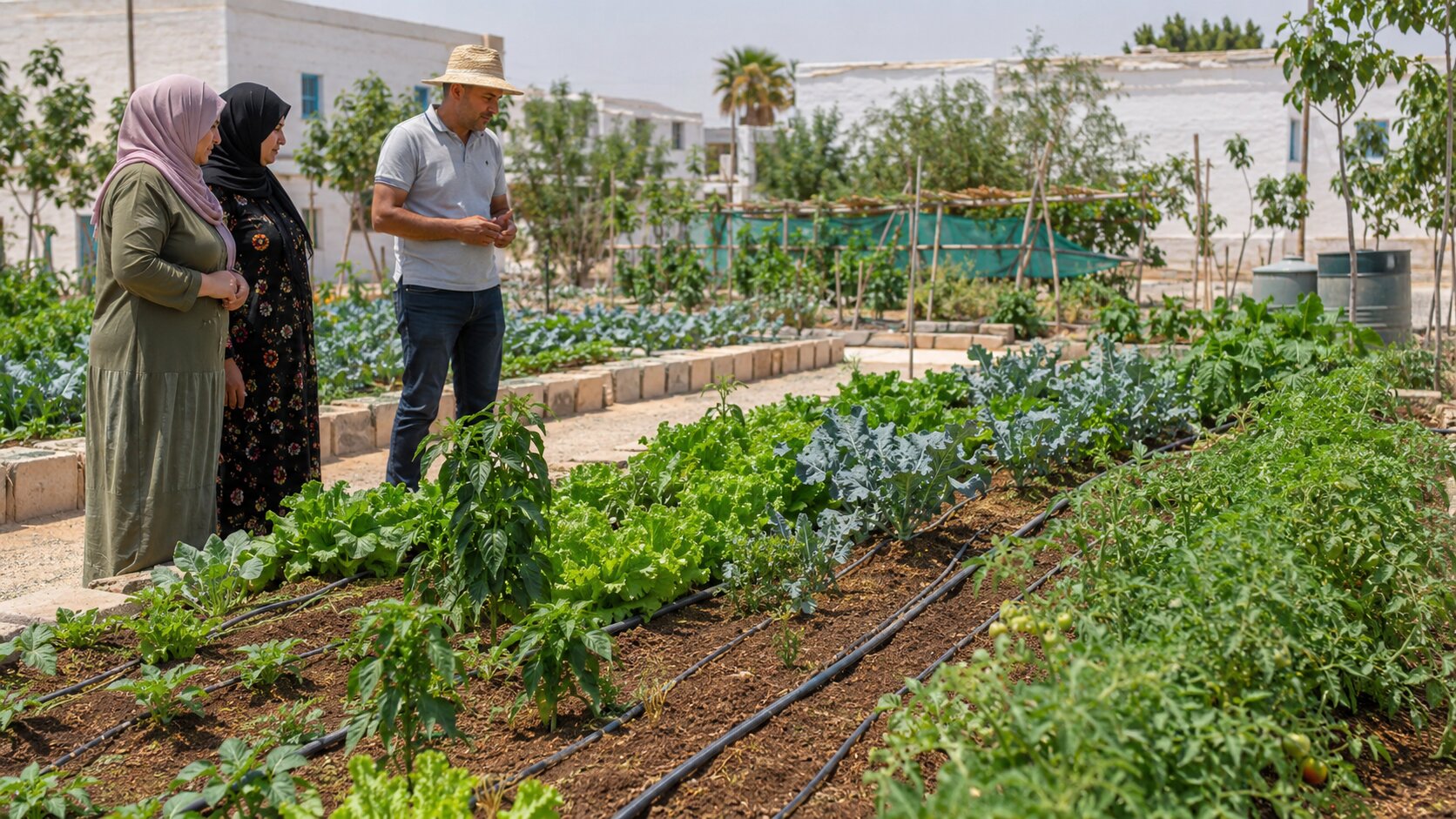
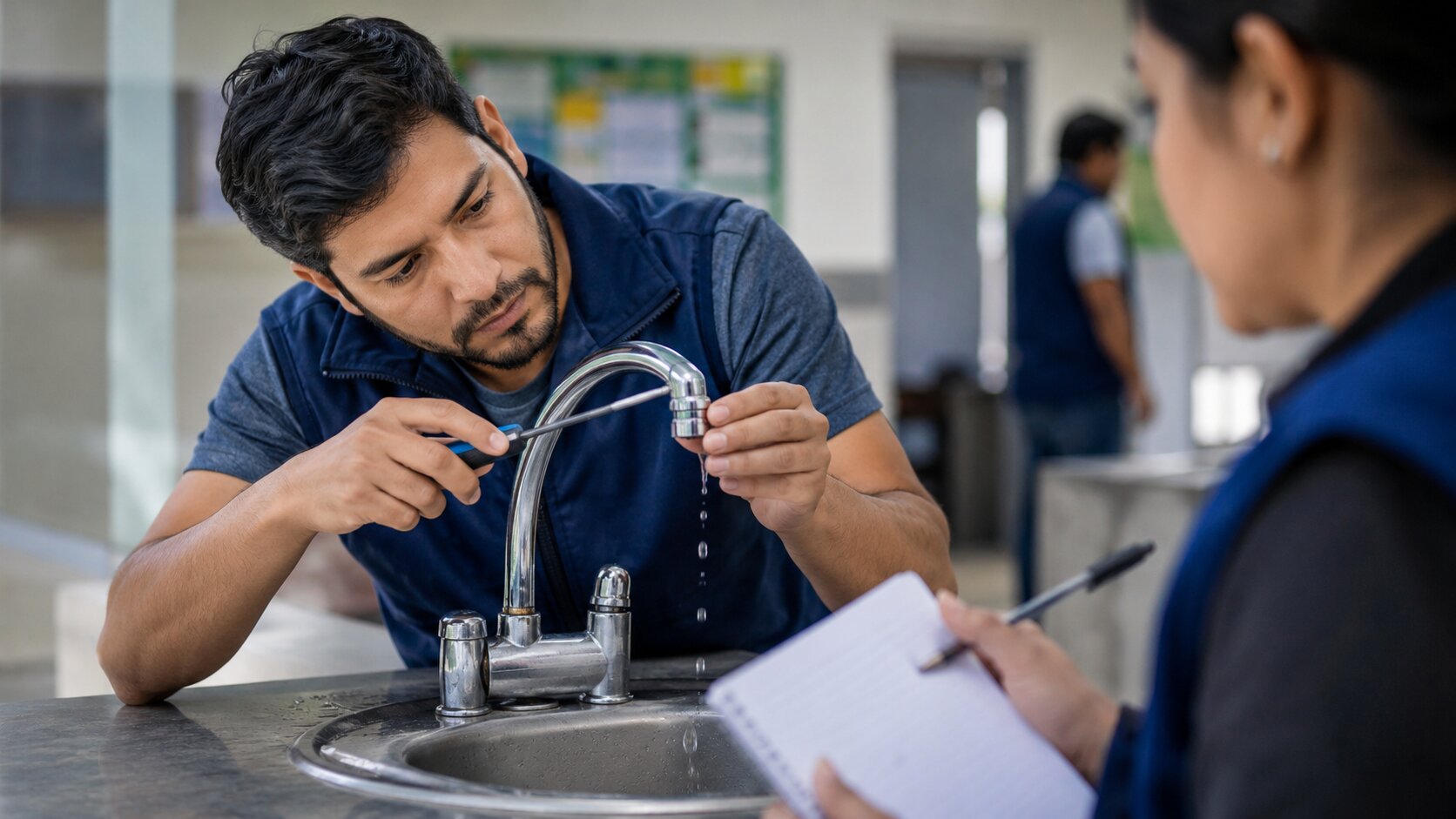
“Water saving is not a constraint: it is a new collective habit that protects our families, our schools and our green spaces.”
Key Project Points
- • Raising awareness among families, schools and associations of water conservation actions.
- • Identify leaks and waste points on pilot sites.
- • Install simple drip irrigation solutions.
- • Develop local relays capable of pursuing good practices.
- • Publish an impact assessment with results and recommendations.
Frequently Asked Questions
Who can participate in the project?▼
Families, schools, associations, community gardens, small farmers, environmental clubs and local communities can participate according to the pilot sites available.
Does the project install equipment?▼
Yes, on some pilot sites. The project can test simple drip irrigation kits, savers or monitoring tools according to the needs identified.
Should we have technical knowledge?▼
No. Workshops are designed to be accessible. The actions explained are simple and adapted to families, students and associations.
How will the impact be measured?▼
Impact will be monitored on the basis of field observations, number of sensitized participants, equipped sites, corrected leaks and recipient returns.
Can companies support the project?▼
Yes. Companies can contribute through equipment, logistical support, technical partnership or financial support to more pilot sites.
Participate in the project
Each contribution can help save water: an organized workshop, a corrected leak, an installed kit or a shared good practice can have a lasting impact.
Project news
Follow the workshops, pilot facilities, practical advice and project results.
Aucune actualité disponible.